
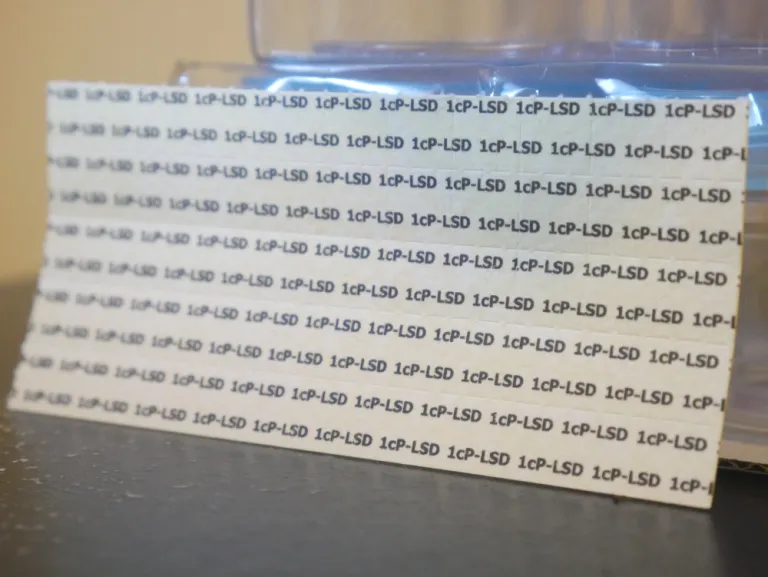
1P-LSD Blotters (100 mcg) for sale
What Is 1P-LSD? |buy 1P-LSD Blotters (100 mcg) for sale
1P-LSD, scientifically known as 1-propionyl-lysergic acid diethylamide, is a synthetic psychedelic compound belonging to the lysergamide family.
It is chemically related to LSD (lysergic acid diethylamide) and has attracted scientific and public interest because of its structural similarities to classical psychedelic substances.
1P-LSD is commonly discussed in research and educational contexts involving psychedelic chemistry, altered perception, and the pharmacology of lysergamides.
Understanding 1P-LSD Blotters
Blotter paper is a format historically associated with LSD and certain related substances.
A blotter is a small piece of absorbent paper. However, its appearance, printed design, or labeling cannot establish the chemical identity, concentration, or purity of the substance it may contain.
The description “100 mcg” refers to a claimed microgram quantity. A label alone does not verify the actual amount present.
How Does 1P-LSD Affect the Brain?
1P-LSD is associated with the serotonergic psychedelic family.
Classical psychedelics primarily produce their characteristic effects through interactions with serotonin receptors, particularly the 5-HT2A receptor.
These interactions can influence:
- Sensory perception.
- Visual processing.
- Emotional responses.
- Thought patterns.
- Time perception.
- Self-awareness.
Research into the precise pharmacological properties of 1P-LSD is ongoing.
What Are the Reported Effects of 1P-LSD?
Reported psychedelic effects can include:
- Changes in visual perception.
- Increased sensory awareness.
- Altered perception of time.
- Unusual thought patterns.
- Emotional fluctuations.
- Changes in the perception of surroundings.
- Intense introspective experiences.
- Distortion of ordinary sensory experiences.
Experiences vary considerably between individuals and may be pleasant, confusing, or frightening.
How Long Do 1P-LSD Effects Last?
The duration of psychedelic effects can vary depending on individual physiology, the substance’s composition, and other circumstances.
Psychological effects may continue for an extended period, and some individuals report difficulty sleeping or emotional sensitivity afterward.
A claimed concentration or product description cannot reliably predict an individual’s experience.
Potential Side Effects of 1P-LSD
Possible adverse effects associated with psychedelic substances include:
- Anxiety.
- Panic.
- Confusion.
- Increased heart rate.
- Changes in blood pressure.
- Restlessness.
- Nausea.
- Difficulty sleeping.
- Impaired judgment.
- Disorientation.
Intense psychological reactions may be particularly distressing for people with certain psychiatric vulnerabilities.
Can 1P-LSD Affect Mental Health?
Psychedelic substances can produce substantial changes in perception and emotional processing.
Some experiences may involve fear, paranoia, panic, or difficulty distinguishing subjective experiences from the external environment.
People with a personal or family history of certain psychiatric disorders may face additional concerns and should seek professional medical advice.
How Is 1P-LSD Different From LSD?
1P-LSD and LSD are chemically related lysergamides, but they are not identical compounds.
1P-LSD contains an additional propionyl group in its molecular structure. Research has investigated whether it can act as a prodrug, meaning it may be converted into LSD in the body.
However, similarities in chemical structure should not be interpreted as proof that the two substances have identical pharmacological properties or effects.
Important Safety Considerations
Products marketed as 1P-LSD may have uncertain chemical composition or labeling accuracy.
A blotter’s design, color, size, or stated concentration cannot establish its contents.
Combining psychedelic substances with other drugs or medications can introduce additional risks. Professional medical guidance is particularly important when prescription medications or underlying health conditions are involved.
Severe confusion, seizures, loss of consciousness, chest pain, or dangerous behavioral changes require immediate medical attention.
Frequently Asked Questions About 1P-LSD
What does 1P-LSD stand for?
1P-LSD stands for 1-propionyl-lysergic acid diethylamide.
Is 1P-LSD related to LSD?
Yes. Both belong to the lysergamide family and have closely related chemical structures.
What does 100 mcg mean?
Microgram (mcg or µg) is a unit of mass equal to one-millionth of a gram. A stated quantity on a product label does not independently verify its contents.
Is 1P-LSD the same as LSD?
No. They are distinct chemical compounds, although 1P-LSD may be metabolized into LSD.
Can 1P-LSD cause psychological distress?
Yes. Psychedelic experiences can involve anxiety, panic, confusion, and other distressing psychological effects.
Final Thoughts
1P-LSD is a synthetic lysergamide psychedelic with a chemical structure closely related to LSD. Its pharmacology, reported effects, and potential conversion into LSD have made it a subject of scientific interest.
Understanding its chemical characteristics, possible psychological effects, and associated health risks is important when researching this compound.
Disclaimer: This content is intended for educational purposes only. It does not promote the purchase, sale, or distribution of controlled substances and is not a substitute for professional medical or legal advice.


Reviews
There are no reviews yet.